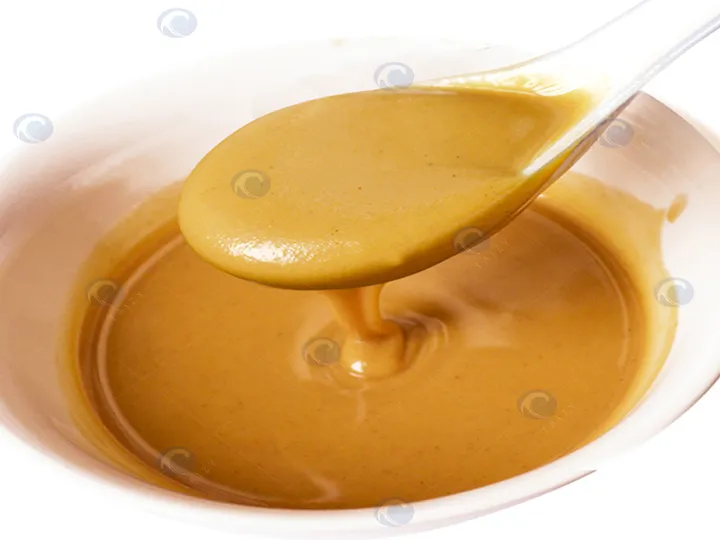
The right small capacity peanut butter making line should match your production target, raw material supply, facility space, energy source, labor needs, and budget. Choosing the right capacity and equipment configuration can help you control costs, maintain consistent peanut butter quality, and leave room for future growth.
This guide covers the key factors to consider before buying a small capacity peanut butter making line, including production capacity, peanut shelling, roasting, dry peeling, grinding, mixing, vacuum degassing, filling, facility requirements, automation, and supplier selection.
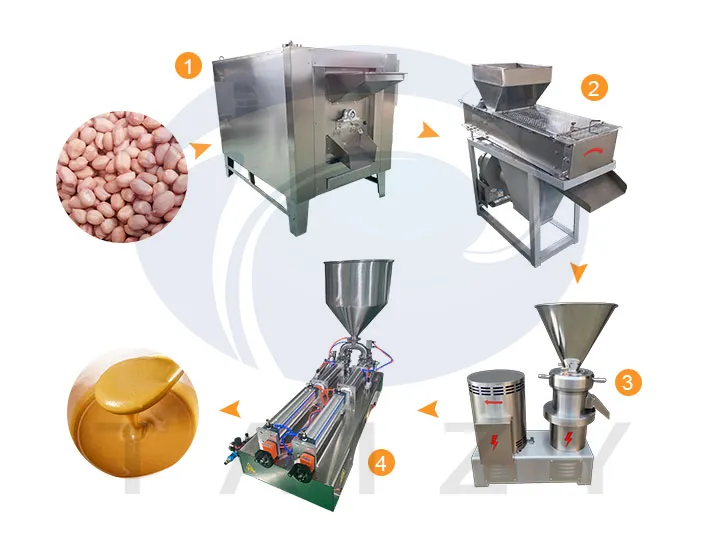
Start with Your Production Target, Not Your Wish
Many buyers ask for the biggest line they can afford. That is usually a mistake. A small capacity peanut butter making line should be sized by daily demand, not maximum ambition.
Ask yourself three questions:
- How many kilograms of peanut butter can I sell per day?
- How many shifts will I run?
- Will my demand stay steady or change seasonally?
If your daily sales target is under 100 kg, a 50 kg/h line is enough. If you plan to sell 100–300 kg per day, an 80–100 kg/h small scale peanut butter production line is more suitable. Buying more capacity than you can fill increases cleaning time, power consumption, and idle depreciation without adding revenue.
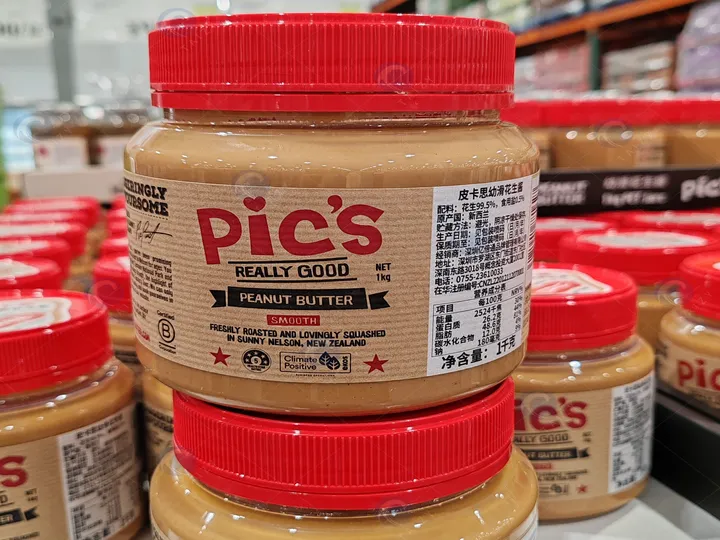
Decide Whether You Need Shelling
A common early decision is whether to process unshelled peanuts or buy shelled kernels.
Buy shelled peanuts if:
- Your daily volume is under 200 kg
- You have a reliable local supplier
- You want a smaller footprint and lower initial investment
- You prefer to focus on roasting and grinding quality
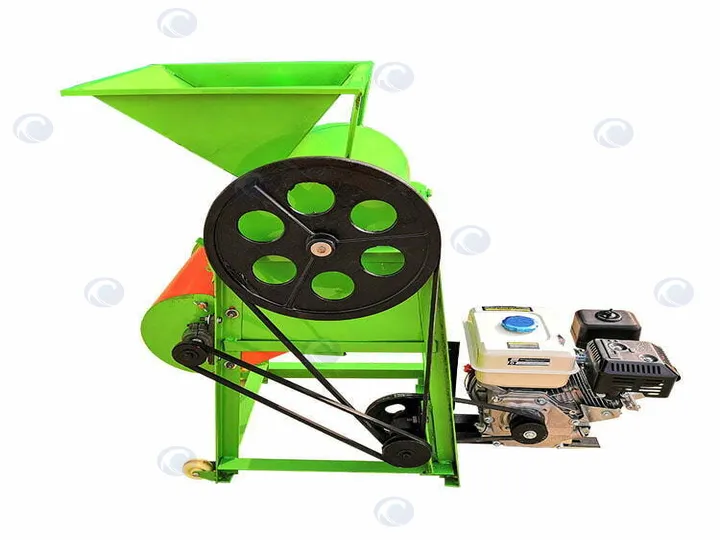
Add a peanut sheller if:
- You source peanuts directly from farmers or cooperatives
- You want full control over raw material quality
- Local shelled peanuts are expensive or inconsistent
- You plan to process large volumes during harvest season
Removing the sheller from your compact peanut butter processing line can reduce both equipment cost and floor space by 10–15%.
Choose the Right Roaster
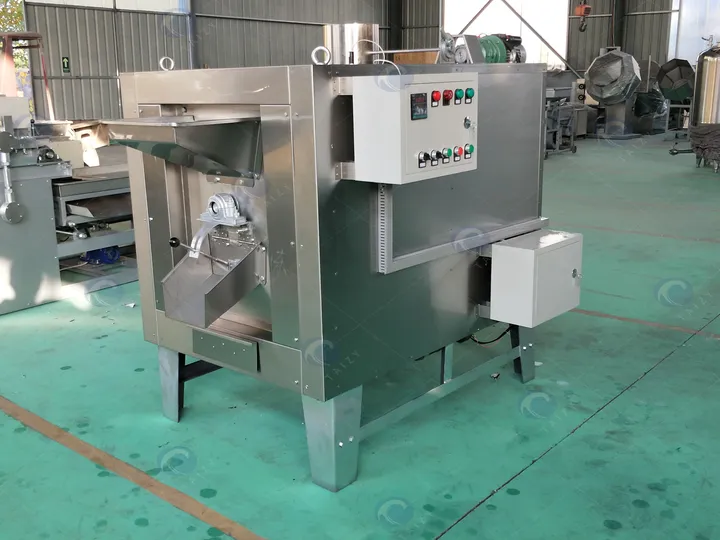
Roasting defines flavor. A good roaster turns raw peanuts into aromatic, evenly cooked kernels. A poor one creates bitter, uneven batches that ruin your product reputation.
For a small capacity peanut butter making line, two heating methods dominate:
Electric roaster
- Precise temperature control
- Clean indoor operation
- Higher energy cost per hour
- Best for locations with stable but expensive gas
Gas roaster
- Lower fuel cost over time
- Requires gas supply and ventilation
- Slightly less temperature precision
- Best for locations with cheap LPG or natural gas
Most 50–100 kg/h lines use drum roasters. Look for a model with thermostat control, adjustable drum speed, and stainless-steel food-contact surfaces.
Do Not Skip Dry Peeling
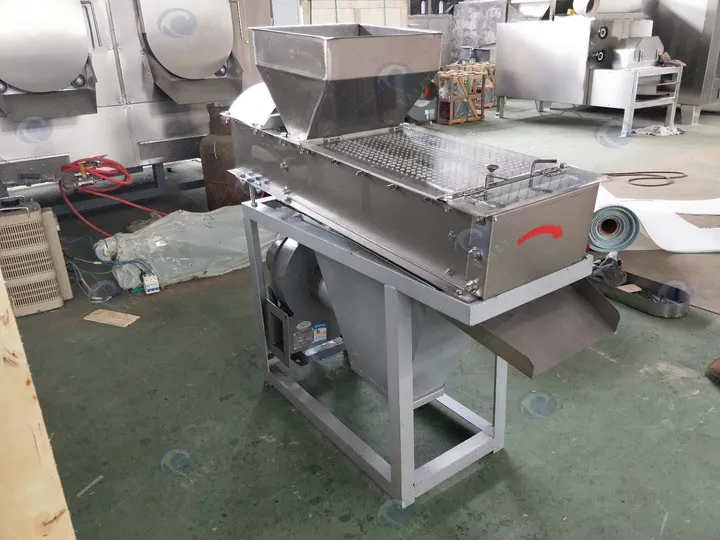
Peanut skins add bitterness and create a rough texture. A dry peeling machine removes red skins using emery rollers and airflow. It keeps peanuts dry, which preserves roasted flavor and avoids reintroducing moisture.
Wet peeling is sometimes cheaper, but it adds water back into the process. That extra moisture shortens shelf life and can create bacterial risks. For a commercial small scale peanut butter production line, dry peeling is the standard.
Select a Grinder That Matches Your Texture Goals
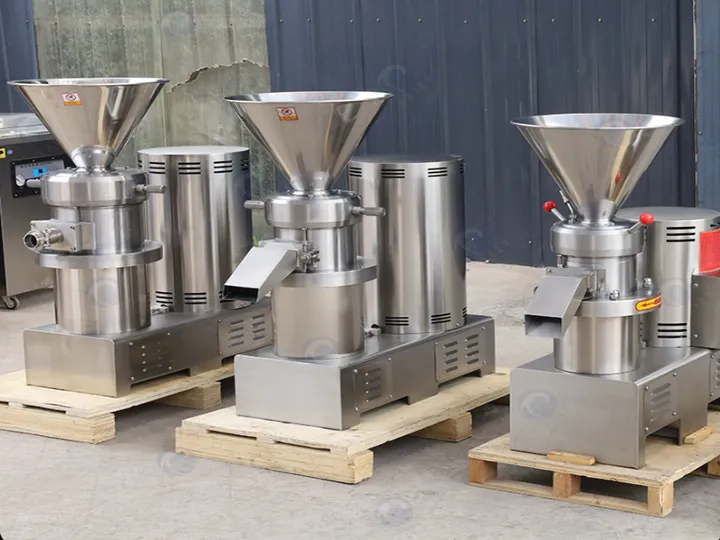
The colloid mill is the heart of your line. It determines whether your peanut butter is smooth, creamy, chunky, or oily.
Key factors when choosing a grinder:
- Fineness range: 2–100 μm covers most market needs
- Cooling system: Water cooling prevents overheating during long runs
- Power: A 7.5 kW grinder handles 80–100 kg/h reliably
- Material: 304 stainless steel for food safety and easy cleaning
If you plan to produce both smooth and crunchy peanut butter, choose a grinder that allows easy gap adjustment. Some producers run two grinds for smooth butter and one coarse grind for crunchy varieties.
Decide on Mixing, Degassing, and Seasoning
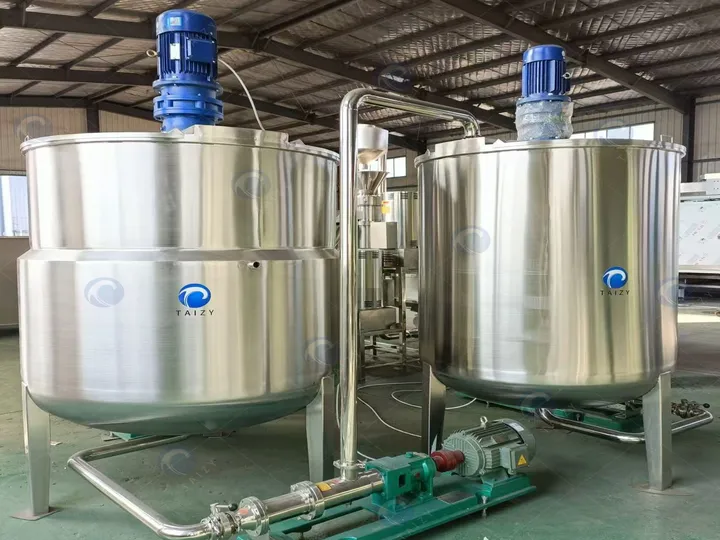
After grinding, peanut butter needs mixing and possibly seasoning. A jacketed agitation tank keeps the paste fluid while you add salt, sugar, honey, stabilizer, or oil.
Then comes a decision that many first-time buyers overlook: vacuum degassing.
Air bubbles trapped during grinding cause three problems:
- Faster oxidation and shorter shelf life
- Foamy, unappealing appearance in jars
- Inconsistent texture
A vacuum degassing tank removes these bubbles and can extend shelf life from 3–6 months to 6–12 months. For any mini peanut butter production line aimed at retail sales, this machine is strongly recommended.
Match Filling Speed to Your Packaging Plan
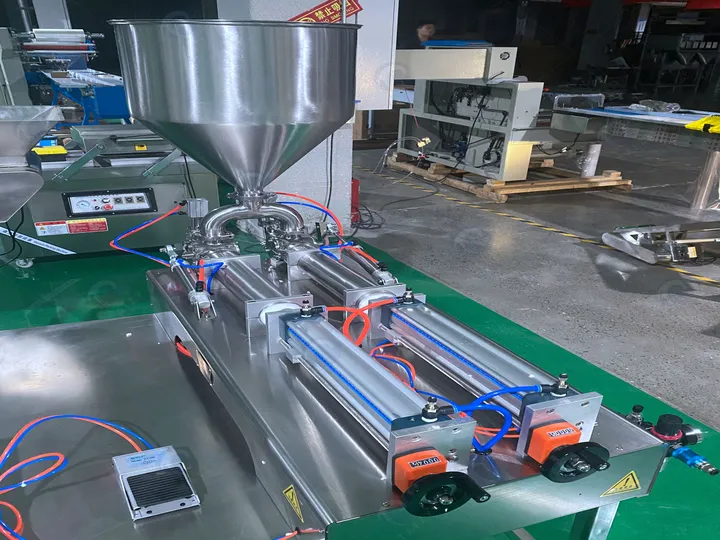
The filling machine is where product meets customer. Semi-automatic piston fillers are common for small capacity lines because they balance speed and affordability.
Consider:
- Filling range: Can it handle your jar sizes, typically 100–1000 ml?
- Accuracy: ±1–2% is standard for piston fillers
- Speed: 400–500 bottles per hour matches a 100 kg/h line
- Container type: Jars, bottles, or pouches?
If you package in multiple sizes, choose a filler with quick volume adjustment. Adding a capping and labeling machine later turns your line into a retail-ready system.
Check Your Facility Before You Order
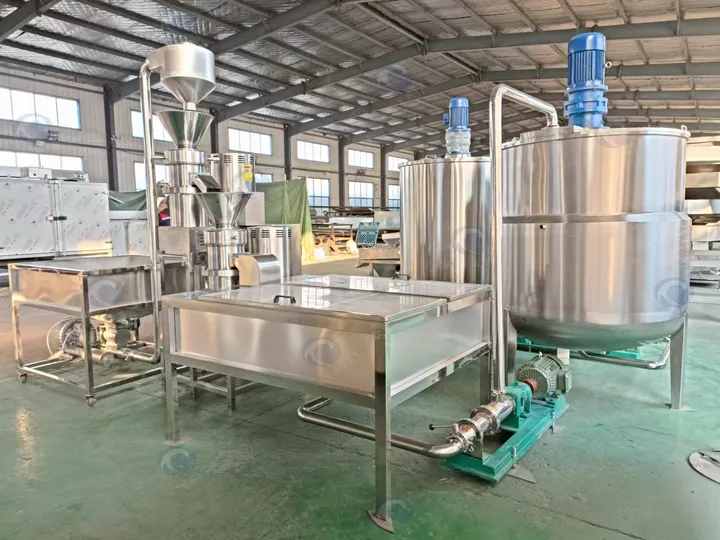
A small capacity peanut butter making line may be compact, but it still needs proper infrastructure.
Confirm these details before requesting a quote:
| Item | Requirement |
|---|---|
| Floor space | 50–80 m² for a basic line; 80–120 m² for a complete line with packaging |
| Ceiling height | At least 2.8–3 m for roaster exhaust and maintenance access |
| Power supply | Most machines need three-phase 380V, 50 Hz |
| Ventilation | Roasting produces heat, smoke, and odors |
| Drainage | Daily cleaning requires floor drains or wash stations |
| Floor surface | Food-safe, washable, non-slip flooring |
If your facility only has single-phase power, your equipment options will be limited. Upgrading electrical infrastructure should be part of your budget.
Balance Automation with Your Labor Situation
A semi-automatic line keeps operators involved in loading, monitoring, and packaging. This is ideal for startups because it reduces capital cost and makes troubleshooting easier.
A fully automatic line reduces labor but increases complexity and price. For most small businesses, the best path is:
- Start semi-automatic
- Add conveyors and automatic fillers as sales grow
- Upgrade to full automation only when daily output justifies it
This modular approach protects your investment and lets your compact peanut butter processing line grow with your business.
Evaluate Suppliers on More Than Price
The cheapest quote is rarely the best quote. When comparing suppliers, look at:
- Material quality: 304 stainless steel food-contact parts
- Motor brands: Known brands last longer and are easier to service
- Spare parts availability: Can you buy belts, seals, and grinding plates locally?
- Technical support: Remote guidance, installation help, operator training
- Warranty terms: At least one year on core equipment
- References: Customers in similar markets or business sizes
A reliable supplier will ask about your raw material, target output, voltage, and facility before giving a quotation. If a supplier quotes without asking these questions, be cautious.
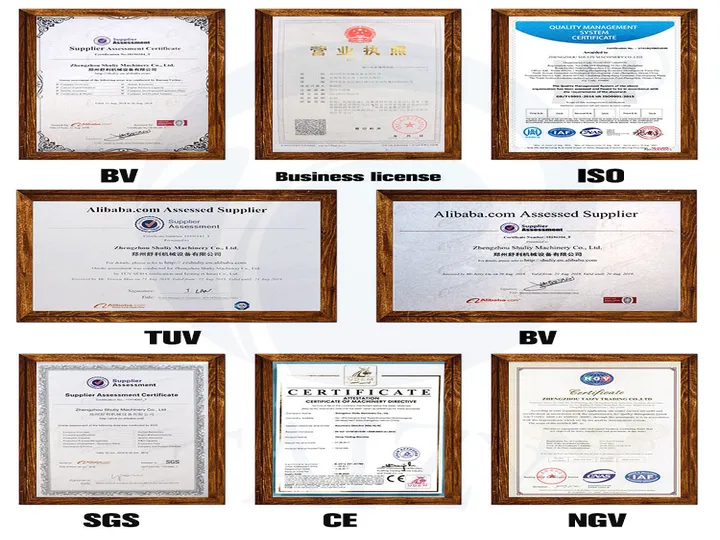
A Simple 5-Step Selection Process
Follow this checklist to choose the right small capacity peanut butter making line:
- Define output — Calculate daily and hourly production needs
- Choose raw material flow — Shelled peanuts vs. unshelled peanuts with sheller
- Select heating method — Electric vs. gas roaster based on local energy prices
- Confirm facility specs — Space, voltage, ventilation, drainage
- Request a tailored quote — Share your targets and facility details with the supplier
Skipping any of these steps often leads to expensive changes later.
Looking for a Small Capacity Peanut Butter Making Line?
Choosing the right small capacity peanut butter making line comes down to matching equipment with real business needs. Define your output target, confirm your raw material source, check your facility, and balance automation with your budget. A well-planned small scale peanut butter production line will produce consistent quality, reduce labor, and create room for growth.
Not sure which configuration fits your business? Contact Taizy Machinery today. Share your target capacity, raw material, and local voltage, and we will recommend the right mini peanut butter production line setup for your goals.